Health and Safety Policy — Commercial Waste Marlow Operations
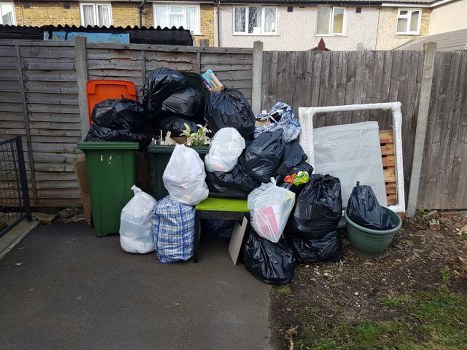 Introduction: This Health and Safety Policy sets out how our commercial waste and rubbish management teams will work safely and responsibly across our rubbish company service area. The policy applies to all staff, contractors and temporary workers involved in commercial waste collection, transfer and disposal. Our objective is to reduce workplace incidents, protect the public and maintain regulatory compliance while delivering reliable commercial waste collection services.
Scope: The policy covers daily operations including refuse collection, recycling services, container servicing, vehicle operation and depot activities. It addresses risks commonly associated with commercial rubbish collection and waste management operations, such as manual handling, vehicle movements, exposure to hazardous materials and slips, trips and falls.
 Responsibility and Safety Culture: Senior management retains overall accountability for health and safety, while supervisors and team leaders are responsible for on-the-ground implementation. All employees must cooperate with reasonable instructions and report hazards. We promote a positive, proactive safety culture where every team member is empowered to stop unsafe work, report near-misses and contribute to continuous improvement.
Risk Assessment and Control Measures
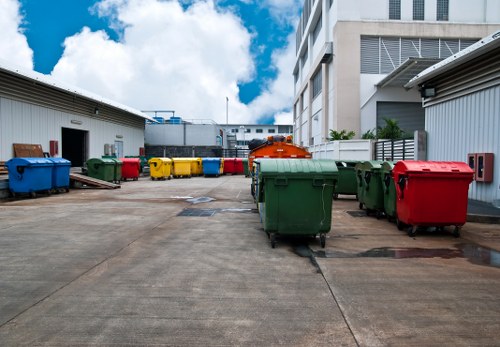 Comprehensive risk assessments are maintained for routine activities and non-routine tasks. Controls follow the hierarchy of risk management: elimination, substitution, engineering controls, administrative controls and personal protective equipment (PPE). Examples of controls include vehicle route planning to reduce reversing, mechanical aids for lifting bulky items, secure containment for sharps and clear segregation for hazardous waste types.
Key operational controls include:
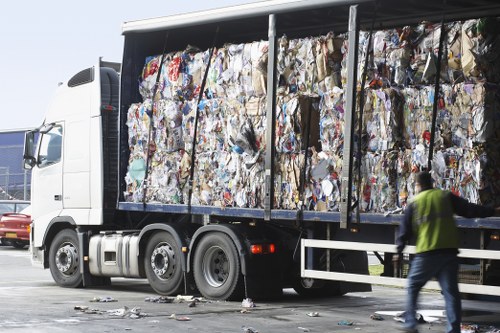
- Vehicle safety: daily pre-shift checks, seatbelt use, safe loading limits and supervised reversing procedures;
- Manual handling: training on lifting techniques, use of trolleys and mechanical lifters to lower physical strain;
- Hazardous materials: identification, segregation and secure containment with clear labelling and safe transfer procedures;
- PPE: mandatory PPE standards such as high-visibility clothing, gloves, safety boots and eye protection where required.
Training, Competence and Communication
All operational staff receive induction training specific to commercial waste collection, with refresher courses on secure lifting, vehicle operation and hazardous waste handling. Supervisors are trained in risk assessment and incident investigation. We maintain clear written procedures and job-specific checklists so that everyone understands their responsibilities in the rubbish removal and waste management process.
Communication is supported through toolbox talks, site briefings and documented handover processes. Safety notices and updated risk information are provided at depots and through digital channels used by crews. We encourage an open dialogue so that improvements in the waste service area can be quickly adopted.
Incident Reporting and Investigation: All incidents, near-misses and dangerous occurrences must be reported immediately and logged. Investigations identify root causes and corrective actions to prevent recurrence. Findings are shared with relevant teams to ensure lessons learned are embedded into operational practice.
Health, Welfare and Occupational Health — The company provides access to occupational health services and welfare facilities to support staff wellbeing. Regular health surveillance is provided where work tasks may pose a risk to hearing, respiratory health or musculoskeletal condition. Staff are encouraged to report any health concerns arising from their duties so that adjustments or medical advice can be offered.
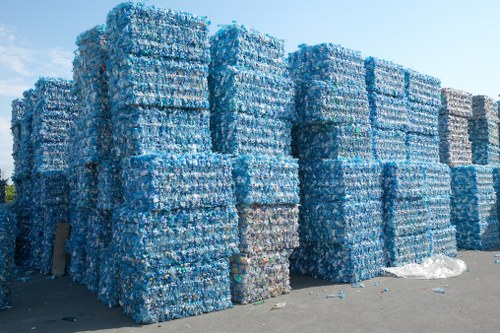
 Environmental considerations and spill response are integrated into operational plans. Spill kits, containment equipment and emergency contact protocols are available at operational sites. Waste containment, transfer and recycling procedures are designed to minimise environmental impact while protecting staff and the public.
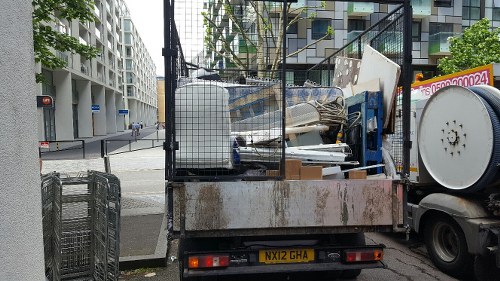 Monitoring, Review and Continuous Improvement: Performance is monitored through audits, inspections and key safety performance indicators for the commercial rubbish and waste collection service. Annual reviews ensure the policy remains current and responsive to operational changes. Where incidents or legislative updates occur, the policy will be revised and communicated promptly.
Responsibilities Summary: Managers must provide resources and leadership; supervisors must ensure safe systems are in place; employees must follow procedures and use PPE; contractors must meet company safety standards. Together, these responsibilities create a robust framework for safe and reliable commercial waste services across our service area.
Commitment: We are committed to continually improving health and safety performance and protecting everyone affected by our operations. Maintaining safe, compliant and efficient commercial waste collection is central to our mission as a rubbish company serving businesses and properties within our service area.
Review Cycle: This policy will be reviewed at least annually or sooner if there are significant operational changes, new hazards, or changes in legislation. Records of reviews, training and incident investigations are retained to demonstrate due diligence and to support ongoing safety improvements.
